
The global kitchenware landscape is undergoing an irreversible structural realignment. For decades, retail shelves and e-commerce storefronts were dominated by synthetic polyurethane sponges—cheap to manufacture, yet catastrophic for the environment. Today, an increasingly vocal, eco-conscious consumer base is forcing a massive shift. Commercial buyers, procurement officers, and e-commerce brand owners are moving away from fossil-fuel-derived cleaning tools toward compostable, plant-based alternatives.
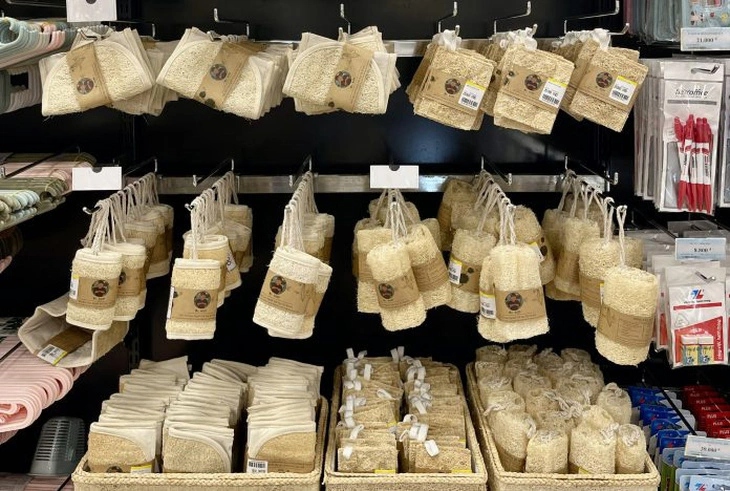
Among these alternatives, one specific material has emerged as a clear market leader: natural loofah. This article provides a comprehensive commercial analysis of why natural loofah sponges are dominating retail trends, giving you the operational and strategic insights needed to capitalize on the booming zero waste kitchen sponge wholesale market.
1. The Macro Shift in Sustainable Kitchenware Retail
To understand why natural loofah is replacing synthetic alternatives, retail buyers must look at the macroeconomics of consumer behavior. The modern consumer no longer views sustainability as a premium niche feature; it is an baseline expectation. Regulatory pressures in the United States and the European Union are penalizing single-use plastics and non-biodegradable waste, driving grocery chains, boutique home stores, and Amazon FBA businesses to restock their inventories with verified green products.
Synthetic sponges are a hidden environmental crisis. Made from petrochemicals, they cannot be recycled. Every time a consumer washes dishes with a plastic sponge, thousands of microplastic fibers break off, passing through water filtration systems and contaminating marine ecosystems. Furthermore, these synthetic pads trap bacteria quickly, resulting in a short lifecycle that forces consumers to throw them away within weeks, sending millions of tons of non-biodegradable waste to landfills annually.
Natural loofah, derived from the fibrous vascular network of the Luffa aegyptiaca fruit, solves every single one of these commercial and environmental pain points:
-
100% Biodegradable & Compostable: At the end of its useful life, a natural loofah kitchen sponge can be buried in a backyard compost bin, breaking down completely into organic matter within 4 to 6 weeks.
-
Naturally Antimicrobial Structures: The open-cell, breathable fibrous structure of dried loofah allows it to dry rapidly after use. This swift evaporation prevents the damp, anaerobic environment where dangerous bacteria and foul odors thrive.
-
Superior Scrubber Performance: Unlike soft plastics that wear down quickly or metal scrubbers that scratch delicate non-stick cookware, natural loofah possesses a unique physical property. It remains firm and abrasive enough when dry to scrub away burnt food, yet softens beautifully when submerged in warm water, making it safe for ceramics, stainless steel, and cast iron.
For enterprise buyers looking to secure a reliable zero waste kitchen sponge wholesale pipeline, understanding these shifting market dynamics is essential to keeping retail shelves relevant and profitable.
2. Deep Dive Into the Supply Chain: From VietGap Global Farms to Global Retail
A sustainable product is only as credible as its supply chain. For high-volume buyers searching for an organic loofah supplier, assessing agricultural and processing standards is the most critical step in protecting brand equity. Cheap, unverified loofah options often flood the market, but these products frequently suffer from inconsistent fiber density, chemical bleaching residues, and unethical labor practices that can ruin a brand’s reputation.
The gold standard for premium natural loofah sourcing is established through strict agricultural frameworks. By anchoring operations within VietGap global farms, the cultivation process is carefully monitored to eliminate heavy chemical pesticides and synthetic growth regulators.
The Cultivation and Harvesting Matrix
Cultivating commercial-grade loofah requires precision. The vines must be trellised correctly to ensure the fruit grows straight and uniform, which maximizes the yield of usable kitchen sponge cuts. If the fruit touches the soil, it discolors and rots, destroying the structural integrity of the fibers.
Harvesting must occur at the exact moment of physiological maturity. If picked too early, the fibers are too soft, lacking the durability required for a commercial dish scrubber. If harvested too late, the outer husk hardens, the seeds become tightly embedded, and the inner fibers turn woody, brittle, and overly harsh on delicate surfaces. Trained agricultural partners across our network of 19 VietGap farms manually inspect each gourd, selecting them at the peak of their fibrous cross-linking maturity.
Chemical-Free Processing Protocols
Once harvested, the processing phase determines whether the product truly fits the “zero waste” ethos. Standard mass-market loofahs are often boiled in caustic sodium hydroxide or bleached with toxic chlorine solutions to achieve a uniform, stark white appearance. This harsh chemical treatment breaks down the natural cellulose walls, making the sponge mushy, reducing its lifespan, and leaving chemical residues that leach into dishwater.
The premium B2B manufacturing approach utilizes a strict chemical-free washing and curing process:
-
Natural De-husking & Washing: The outer skin is mechanically split and peeled away. The gourds are then washed repeatedly in pure, pressurized water to flush out pulp residues and natural sugars that could attract insects.
-
Solar Curing and Sun Drying: Instead of using fossil-fuel-powered industrial ovens, the clean loofah cores are arranged on elevated drying racks under natural sunlight. This solar curing process naturally sanitizes the fibers and lightens the shade to an authentic, warm cream color without destroying the structural lignin bonds.
-
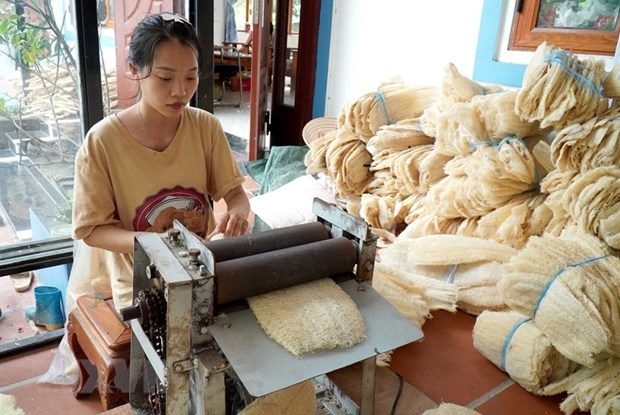
Mechanical Softening and Sizing: After drying, the loofahs undergo a specialized mechanical pressing process that flattens them for precise cutting and stitching. This structural compression ensures that when the end consumer wets the sponge, it expands uniformly into its ergonomic, high-performing shape.
By ensuring that your zero waste kitchen sponge wholesale supply chain bypasses toxic chemical processing, your brand can confidently market a truly non-toxic, hypoallergenic product to eco-conscious families worldwide.
3. Structural Varieties & Custom OEM Manufacturing for Enterprise Brands
The kitchen cleaning category is not one-size-fits-all. To capture maximum market share on platforms like Amazon or Etsy, or to supply commercial catering corporations, brands must offer diverse product form factors. Utilizing OEM loofah manufacturing allows corporate buyers to customize shapes, stitching styles, and multi-functional layers to meet precise target market demands.
| Product Form Factor | Target Market Segment | Primary Functional Advantage | Key B2B Customization Options |
| Pure Loofah Slices & Roll Cuts | Zero-waste purists, Etsy artisans, DIY subscription boxes. | Maximum airflow, 100% single-ingredient product, zero thread waste. | Custom thickness cutting (from 1.5cm to 15cm), diameter grading. |
| Dual-Sided Compressed Sponges | Mass-market switchers, heavy-duty dishwashing consumers. | Combines a soft cellulose layer for foam generation with a loofah scraping layer. | Organic cotton stitching, water-based non-toxic adhesives, custom branding stamps. |
| Ergonomic Stitched Loofah Pads | Ergonomic premium home retail, modern kitchen design stores. | Double-layered loofah with integrated cotton hanging loops for rapid drying. | Custom geometric shapes (oval, rectangular, teardrop), colored cotton borders. |
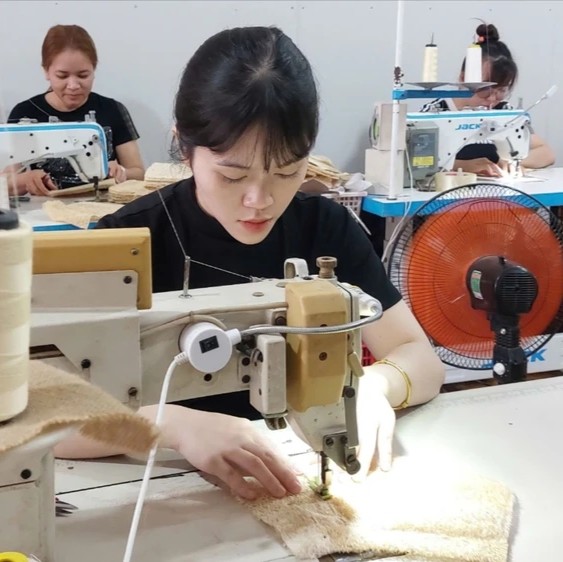
For private label brands looking to differentiate themselves, relying on seasoned B2B wholesale services ensures access to state-of-the-art die-cutting and heavy-duty industrial sewing machinery. Whether your brand requires a sleek, minimalist rectangle for Scandinavian-style home boutiques or a multi-layered, thick scrub pad for high-volume restaurant kitchens, customizing the density and dimensions ensures your product outperforms synthetic alternatives.
Moreover, embedding fair-trade principles into the core of your manufacturing story elevates your brand value. When international buyers learn about our sustainable story, they discover a business model rooted in economic justice. Supporting fair-trade partnerships with local Vietnamese farming communities ensures fair wages, safe working conditions, and long-term agricultural sustainability. This human element creates a compelling, authentic narrative that resonates deeply with modern consumers and builds lasting brand loyalty.
4. Overcoming B2B Import Logistics & Regulatory Hurdles
Importing natural agricultural products into highly regulated jurisdictions like the United States or the European Union requires navigating specific customs frameworks. Many procurement managers hesitate to transition to natural fibers due to fears of customs delays, quarantine rejections, or unpredictable shipping overheads. Partnering with an experienced exporter mitigates these operational risks.
Navigating Customs and Phytosanitary Requirements
Because natural loofah is a dried plant product, customs authorities—such as the US Customs and Border Protection (CBP) and the European Customs Information Portal—require strict compliance to ensure no invasive pests or organic pathogens cross borders.
-
Phytosanitary Certification: Every bulk shipment leaving Vietnam must be accompanied by an official Phytosanitary Certificate issued by the Ministry of Agriculture and Rural Development (MARD). This document proves the loofah has been thoroughly inspected, heat-treated, or fumigated, and is completely free of harmful pests and plant diseases.
-
Fumigation Certificates: Most international sea freight routes require a standard methyl bromide or phosphine fumigation treatment before loading. Securing a clean, certified fumigation report prevents your shipping containers from being held at US or EU ports for expensive secondary treatments or destruction.
-
HS Code Classification: Correctly classifying your cargo is critical to avoiding miscalculated tariffs. The globally recognized Harmonized System code for finished loofah products typically falls under HS Code 4602.19 (Basketwork, wickerwork, and other articles, made directly to shape from plaiting materials) or HS Code 1404.90 (Vegetable products not elsewhere specified or included). Proper documentation ensures seamless clearance and prevents unexpected duties.
Maximizing Shipping Efficiencies through High Compression
Unprocessed natural loofah is incredibly high-volume and low-weight. If shipped in its natural rounded state, you end up paying thousands of dollars to transport empty air inside shipping containers, driving up your per-unit shipping costs and shrinking retail margins.
To solve this logistical bottleneck, advanced export facilities utilize industrial hydraulic pressing machines. The loofah kitchen sponges are heavily compressed and flattened before final packaging. This high-density packing method allows exporters to fit up to four times the volume of products into a standard 20-foot or 40-foot high-cube container. Once the shipment arrives at your destination warehouse and the individual product wrappers are opened, the natural memory of the organic plant fiber responds to ambient humidity, or expands completely upon contact with water, restoring its full thickness and shape.
Optimizing container volume directly reduces the carbon footprint per unit, aligning your logistics strategy with the green ethos of the product itself.
5. How to Launch and Scale a Private Label Loofah Line
For e-commerce entrepreneurs looking to establish a dominant presence in the zero waste kitchen sponge wholesale niche on Amazon or Etsy, execution speed and product differentiation are everything. Below is a practical roadmap to launching a successful private label natural loofah product line.
Step 1: Optimize for Amazon FBA Packaging Requirements
Amazon’s fulfillment centers have strict packaging rules. To avoid extra prep fees or product rejections, ensure your natural loofah sponges are packed efficiently. Individual units should be enclosed in clear, biodegradable cornstarch-based polybags or minimalist kraft paper boxes, with a scannable GS1 barcode or Amazon FNSKU label clearly printed on the exterior.
Step 2: Craft a High-Converting Brand Narrative
Do not just sell a sponge; sell an environmental solution and an authentic story. Use high-quality imagery on your listings that highlights the raw, chemical-free look of the loofah. Emphasize that your products are sourced from sustainable farms, support rural farming communities, and are processed entirely without toxic bleaches.
Step 3: Mitigate Sourcing Risks via Low-Volume Sample Trials
Never commit to a massive, full-container order with an unverified supplier without testing product quality first. Smart procurement managers protect their capital by utilizing a tiered purchasing approach. Before placing large orders, you should order bulk loofah samples to verify structural density, stitching durability, and water absorption behavior firsthand.
Transitioning to a structured B2B trial order allows your quality control team to run real-world friction and kitchen wear-and-tear tests. This validation ensures the product aligns perfectly with your brand’s strict quality standards before launching high-volume retail distributions.
Conclusion: Securing Market Leadership in the Green Wave
The transition toward a plastic-free kitchen is more than a passing phase—it is a long-term economic realignment. As consumers continue to abandon toxic synthetic products, retail shelves must adapt. Brands that secure reliable, chemical-free, and high-volume partnerships with a reputable organic loofah supplier today will own the market share of tomorrow.
By understanding the agronomy behind farming standards, leveraging custom OEM capabilities, and optimizing international shipping logistics, your brand can scale a highly profitable, ethical, and top-tier product line. Let’s phase out plastic and build a truly sustainable future together.
Ready to Upgrade Your Inventory?
Are you ready to establish your brand at the forefront of the sustainable kitchenware movement? Don’t let supply chain bottlenecks hold your business back.
-
Explore Our Capabilities: Review our complete production standards and custom manufacturing options through our B2B wholesale services.
-
Test Our Quality: Secure an initial low-risk B2B trial order today to inspect our premium, chemical-free loofah sponges firsthand.
-
Connect with Our Experts: Ready for custom dimensions or contract manufacturing? Contact HiBrews today to speak directly with our international export logistics team.
For more real-time production insights, organic farming updates, and sustainable business trends, connect with our executive team across our verified corporate network:
-
Follow our corporate updates on LinkedIn via CEO Hibrews Nguyen LinkedIn.
-
Join our sustainable community on Facebook at HiBrews Eco Facebook.
-
Watch behind-the-scenes farm tours and manufacturing deep dives on the HiBrews YouTube Channel.
-
Discover product inspirations and aesthetic green living visuals on HiBrews Instagram.

Leave A Comment